


























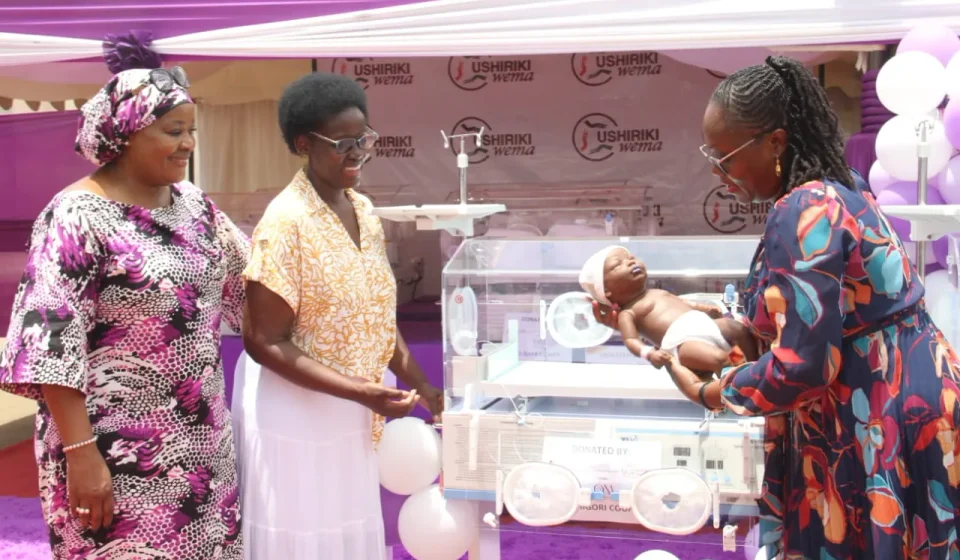

KISUMU, Kenya, September 30 – Six counties in the Nyanza and Western regions are set to benefit from improved newborn care following the handover of neonatal incubators under the Okoa Malaika programme.
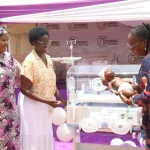
The equipment, donated by Ushiriki Wema Foundation, is intended to support premature and critically ill babies, addressing gaps in facilities where health workers may lack the equipment needed to save newborn lives.
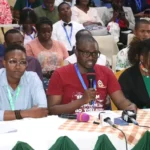
Speaking during the Phase Nine handover at Lumumba Sub-County Hospital in Kisumu, foundation chairperson Tessie Musalia said the incubators represented more than medical equipment, offering vulnerable newborns a better chance of survival.
She called on beneficiary counties and hospitals to ensure the equipment was properly installed, maintained and supported by trained health workers, warning that its impact depended on whether it remained functional and readily available when needed.
The latest phase targets Kisumu, Siaya, Homa Bay, Kisii, Nyamira and Migori counties, extending support to facilities serving mothers and newborns across the region.
Kisumu First Lady Dorothy Nyong’o welcomed the intervention, noting that referral hospitals serve families beyond county boundaries, including patients from neighbouring counties and across the borders with Uganda and Tanzania.
She said strengthening newborn services at the facility would therefore benefit families far beyond Kisumu, while urging health teams to use the donated equipment effectively and sustain improvements through training and mentorship.
The handover comes as Kenya pursues its Every Woman, Every Newborn, Everywhere acceleration plan, which seeks to reduce preventable maternal and newborn deaths.
For families whose babies arrive too soon or require specialised care, access to functioning equipment and skilled health workers can make the difference between life and death.
She urged government agencies, communities and development partners to work together to reduce preventable maternal and newborn deaths.
Mrs. Mudavadi said no single institution could address the challenges facing mothers and newborns without sustained collaboration and investment in healthcare.
“The Government cannot do this work alone. Neither can civil society, development partners or communities working separately,” Mudavadi said.
She called on all stakeholders to align their interventions with the EWENE (Every Woman, Every Newborn, Everywhere) Acceleration Plan 2026-2028, saying mothers and newborns must remain at the centre of healthcare decisions.
“Success will require all of us to align our efforts with the EWENE Acceleration Plan 2026-2028 agenda and place mothers and newborns at the centre of our decisions,” she said.
The equipment handover marked Phase Nine of Okoa Malaika, an Infant Pre-Term Mitigation Programme that supports hospitals with neonatal equipment to improve the chances of survival for babies born prematurely.
Mrs Musalia said shortages of essential equipment in health facilities could undermine the efforts of healthcare workers who have the skills and commitment to save newborn lives.
“Behind every preterm baby fighting for life is a mother and a family waiting, praying and hoping that their child will survive,” she said.
She noted that some premature babies are born in facilities where the equipment required to provide specialised care is insufficient.
“A preterm baby may be born in a hospital, yet the facility may not have enough incubators to provide the care they need. A healthcare worker may have the knowledge, skills, and commitment to save a life, but lack the essential equipment to do so,” she said.
Additionally, She said the incubators being donated should be viewed as lifesaving tools that can give premature babies a better chance of survival.
She also challenged the beneficiary counties and health facilities to ensure the equipment is properly installed, maintained and kept operational.
“I therefore call upon the beneficiary counties and facilities to ensure that these incubators are properly installed and maintained so that this equipment remains functional and available to serve newborns for many years to come,” she said.
The Okoa Malaika programme is implemented through Ushiriki Wema Foundation, a non-profit initiative run by Mudavadi under the Office of the Spouse of the Prime Cabinet Secretary.
Ushiriki Wema has also worked with the Ministry of Health and other partners to advance the EWENE agenda, including supporting the development of the National EWENE Acceleration Plan.
The national plan was launched by President William Ruto on May 28, 2026, as part of efforts to accelerate action towards ending preventable maternal and newborn deaths.
Njoki Mambo, the Okoa Malaika brand ambassador, said the equipment would give health workers additional support as they care for premature babies.
“Behind every incubator is a mother waiting to hold her child, a family hoping for good news, and a healthcare worker doing everything possible to help a newborn survive,” Mambo said.
She thanked Mudavadi for her continued leadership of the Okoa Malaika programme and efforts to improve newborn care.
