






























PHOTO: L-R : TotalEnergies Communications Manager Robert Kigweru engages Carol Mukaba of Forrester Nation team on the new TotalEnergies Card.
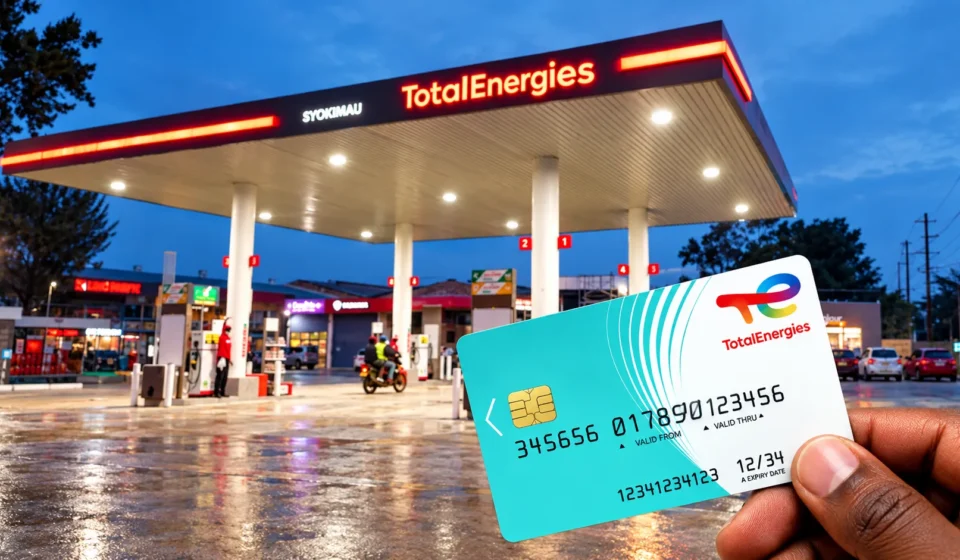
NAIROBI, Kenya, September 11 — TotalEnergies Marketing Kenya has launched a new generation of its TotalEnergies Card, introducing digital payment options and real-time monitoring tools aimed at giving businesses, fleet managers and individual motorists greater control over mobility-related expenses.
The new solution expands the TotalEnergies Card beyond its traditional role as a fuel payment tool, with features designed to improve transaction visibility, payment security, expenditure control and tax compliance.
According to TotalEnergies Marketing Kenya Managing Director Thibault Flichy, the new card responds to growing demand from businesses for better oversight of fuel and mobility expenses as operating costs continue to rise.
“Businesses today need greater visibility and control over their fuel expenditure than traditional payment methods can provide,” Flichy said.
The company says the New Generation TotalEnergies Card combines digital payments, real-time transaction monitoring and tax-compliant invoicing to help businesses make better decisions around one of their major operating expenses.
Digital payments replace reliance on physical cards
One of the key changes is the introduction of two cardless payment options: the Mobility Pay mobile application and a virtual card that uses a one-time password (OTP).
The virtual card is designed to work even on phones without internet connectivity, while customers using the mobile application can make payments digitally without relying on a physical card.
The system also introduces instant SMS and email alerts for transactions and anomalies, allowing account holders and fleet managers to monitor activity as it happens.
Businesses will also have access to an upgraded customer portal offering real-time account visibility, transaction monitoring and controls over spending limits.
Other features include pre-authorisation for more controlled fuel dispensing, PIN-secured transactions, RFID vehicle tags and OTP protection for the mobile application and virtual card.
The company says the card also supports simplified tax-compliant invoicing, potentially reducing the administrative burden associated with tracking fuel and mobility expenses.
From fuel card to mobility platform
The TotalEnergies Card has been used in Kenya for more than 25 years. It was originally introduced as the Bon Voyage Fuel Card and was the first fuel card in Kenya to use chip technology, according to the company.
It has since evolved from a conventional fuel card into a broader mobility solution.
The new generation card is accepted across the TotalEnergies service station network in Kenya for eligible products and services.
The move comes as businesses increasingly adopt digital tools to monitor expenses and manage operations, particularly in areas such as fleet management where fuel expenditure can represent a significant recurring cost.
For individual motorists and operators, the cardless payment options could also reduce dependence on physical cards while providing additional transaction controls.
Matatu and boda boda operators can apply at stations
Customers can apply for the New Generation TotalEnergies Card through the TotalEnergies Kenya website https://totalenergies.ke
Matatu and boda boda customers can also apply at TotalEnergies service stations across the country.
TotalEnergies says the new solution is intended to provide businesses and individual motorists with a more secure and flexible way of managing mobility payments while improving visibility over transactions.
The launch is part of the company’s broader push to use technology to improve mobility services as payment habits and customer expectations continue to change.
TotalEnergies Marketing Kenya PLC has operated in Kenya since 1955 and provides fuel, energy and fleet management solutions through its nationwide network.
The company is part of TotalEnergies, a global integrated energy company operating in about 120 countries.
